
7 Social Commerce Examples & How It Works
Your guide to waving that magic social wand and turning likes into buys.

Going viral is fun. Going viral and making sales? Now we’re talking.
Enter: ✨ social commerce. ✨
Instead of asking someone to see your product on social, hunt down your website, find the product again, and then check out, social commerce makes the path from “oooh, I want that” to “order confirmed” SO much shorter.
And this is especially important, since people are shopping this way more than ever: U.S. social commerce sales are expected to surpass $100 billion in 2026.
So, what exactly is social commerce, how does it work, and what does it look like when brands get it right? Let’s get into it with seven social commerce examples worth stealing a little inspiration from.
What is Social Commerce?
Social commerce is exactly what it sounds like: using social media to help people discover, shop for, and buy products without taking a long detour somewhere else.
Instead of someone seeing a product on Instagram or TikTok, leaving the app, searching for your website, finding the product again, and finally checking out, social commerce shortens that path.
Shoppable posts, in-app storefronts, product tags, creator content, and social ads can all help get your products into the hands of the casual scroller who stumbled across it.
The biggest difference between social commerce and traditional social media marketing is that the shopping experience is built much more directly into the content itself. You’re not just using social to get attention — you’re giving people an easier way to act on it.
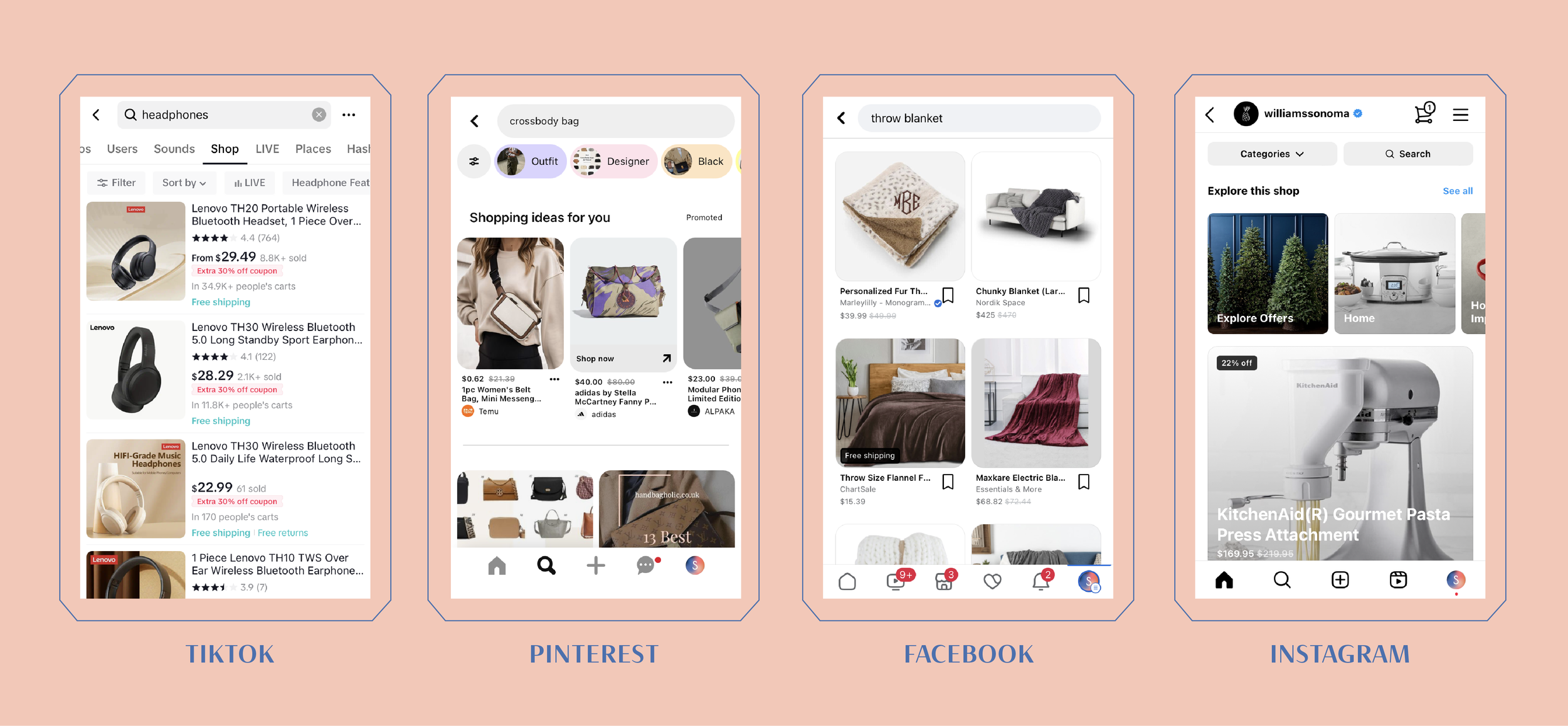
We know what you’re thinking: Yes, it’s been an absolute game-changer for e-commerce brands!
Okay, But How Does Social Commerce Work?
Social commerce works by bringing more of the shopping journey directly into the platforms people are already using.
Someone might discover a product in a Reel, tap a product tag, browse more options, read comments or reviews, and make a purchase with far fewer steps than a traditional social-to-website path.
Depending on the platform, that can include things like:
Shoppable posts and videos
Product tags
In-app storefronts
Social ads with direct shopping links
Creator and influencer content that links straight to products
When it's done right, social commerce makes the shopping experience feel almost as easy as the scrolling.
Why Should You Try Social Commerce?
Because convenience matters. The easier you make it for someone to discover, trust, and shop your products, the fewer opportunities there are for them to drop off along the way.
Social commerce can also help you:
Reduce friction: Fewer clicks and fewer steps can make it easier for people to complete a purchase.
Build trust faster: Reviews, creator content, comments, and user-generated content give shoppers social proof right where they’re already browsing.
Meet customers where they are: Social platforms are already part of how people discover products, compare options, and make buying decisions.
Learn what your audience responds to: Engagement, clicks, saves, comments, and purchases can all give you useful clues about what’s resonating.
And this isn’t exactly a fringe shopping habit anymore. 76% of social media users say social content has influenced a purchase in the past six months. Are you surprised?!
We’ve seen the impact of a strong social strategy firsthand, too. Our work with Elizabeth & Clarke helped support a 9,422% lift in sales during their “work pajamas” rebrand — proof that when the message, creative, and shopping experience work together, social can do a lot more than drive engagement.
What Does Social Commerce Look Like?
If you’re thinking, “Well, I add CTAs to my social posts and stories and have my website linked in my bio… Aren’t I doing the social commerce thing?” Not exactly, friend. Here’s why:
Using social commerce for your brand means creating direct links from your content to purchasing within the social platform itself. This looks like:
Setting up a shop on the platform (like on Meta or TikTok Shop)
Including shoppable links on organic posts and stories
Utilizing shoppable ads (this one’s optional but very worth it!)

Now, let's dive into the nitty-gritty and explore seven brands that are giving us a masterclass of a social commerce example.
7 Unique Social Commerce Examples
1. EyeBuy Direct
This eyewear brand doesn't just sell glasses; it sells an experience. Through virtual try-ons using augmented reality (AR) filters on Instagram and Snapchat, they're letting customers see themselves rocking those frames before making a purchase.

Despite not utiliizing shoppable links regularly, Eyebuy Direct is still swift to make the social shopping experience for their users easy. They also take the time to answer comments asking about their frames–even if it’s already mentioned in the caption. By helping shoppers picture the product on themselves before they buy, EyeBuyDirect removes one of the biggest barriers to purchasing online.
2. Ruggable
Rugs are one of the hardest products to sell online. (Along with candles and beds). But Ruggable makes light work of it with their social commerce approach.
Their choice to showcase their rugs in lived-in environments gives the user more context when making a decision on texture, color, and size. Then directly linking to their social commerce shop, for even easier shopping experience to buy right from the app. a

Speficially on Pinterest, they stand out through sofa-shopping tips and making it a seamless process from pin to buy. Showing the rugs in real homes makes the product feel more tangible and helps customers picture how it could work in their own space.
3. IKEA
IKEA is another brand successfully tapping into the world of social commerce on Pinterest.
Due to inventory and stock availability they don’t specifically connect their product straight to their consumer through pins. But their pins put their furniture right in your home via imagination and inspiration.

Why DIY furniture when you can purchase it at a low and affordable price? IKEA meets DIYers where they are – Pinterest – and offers a price that even they can’t resist. A good social marketing and commerce strategy go hand in hand.
4. Etsy
Another amazing social commerce example? Etsy.
Etsy’s success in social commerce lies in its community-centric approach. Leveraging platforms like Instagram, Pinterest and TikTok, Etsy taps into user-generated content and DIY trends, turning creativity into a currency.
They’ve also made it so their shop owners can promote their Etsy shops on their accounts, lengthening the chain of social commerce. Etsy makes the most of the content its sellers and customers are already creating, turning organic inspiration into a much more natural shopping path.

5. Anthropologie
Anthropologie transforms its Instagram into a visual shopping paradise. Through stunning visuals and engaging storytelling, they create truly immersive shopping experience. And their visuals do more than look good — they create the kind of inspiration that makes someone want to keep browsing, saving, and eventually shopping.

6. Benefit Cosmetics
Benefit Cosmetics takes social commerce to the next level with their interactive content. Utilizing Facebook and Instagram, they offer makeup tutorials and product demos that users can shop while watching, creating an engaging and educational shopping experience.

7. Airbnb
Airbnb ventured into social commerce by offering experiences directly through Instagram. By curating captivating content showcasing unique travel experiences, they inspire wanderlust while making these adventures easily bookable through the platform.

They also cater to both segments of their target audience: guests and hosts. Not only offering visual inspiration to future guests, but they empower and provide tips for hosts to create an even better STR experience.
Let’s Shop!
A wise woman once said, “The shortest distance between two points is a straight line”. So when you’re trying out social commerce for your brand, don’t forget that ease and convenience. The whole point of social commerce is bringing the store even closer to your audience.
Ready to Make Social Commerce Work for Your Brand?
Social commerce works best when it feels seamless and very on-brand — not like you slapped a product tag on a post and called it a strategy.
Scott Social helps e-commerce brands build social media strategies that connect content, community, creators, and conversion in a way that actually makes sense for the people you’re trying to reach.
If your social presence is getting attention but you want it to do more of the heavy lifting, get in touch with us and let’s build a strategy that makes shopping feel like a natural part of the experience.
READ MORE FROM SCOTT SOCIAL

5 REASONS WHY YOUR INSTAGRAM ENGAGEMENT IS DOWN

10 BRANDS TO WATCH: E-COMMERCE SOCIAL MEDIA INSPIRATION

REELS 101: THE ULTIMATE GUIDE FOR 2024

WRITTEN BY:
Victoria
Copywriter + Social Media Strategist