Instagram Stories vs Reels: When and How To Use Them
Consider this an intervention.
You know how Miley Cyrus was both a regular girl and a pop star—same person, completely different jobs?
That's essentially Instagram Stories and Reels.
Same app, same vertical format, totally different purposes. And just like nobody asked Hannah Montana to perform at a school talent show, you shouldn't be using these two formats interchangeably.
Treating them like they're the same tool is one of the more expensive mistakes we see brands make on social, and we mean that in every sense of the word.
The Instagram Stories vs Reels conversation isn't really a debate at all. They're doing completely different jobs. Once you understand which format supports which goal, your whole Instagram strategy gets a lot cleaner.
Stories Are for Your People
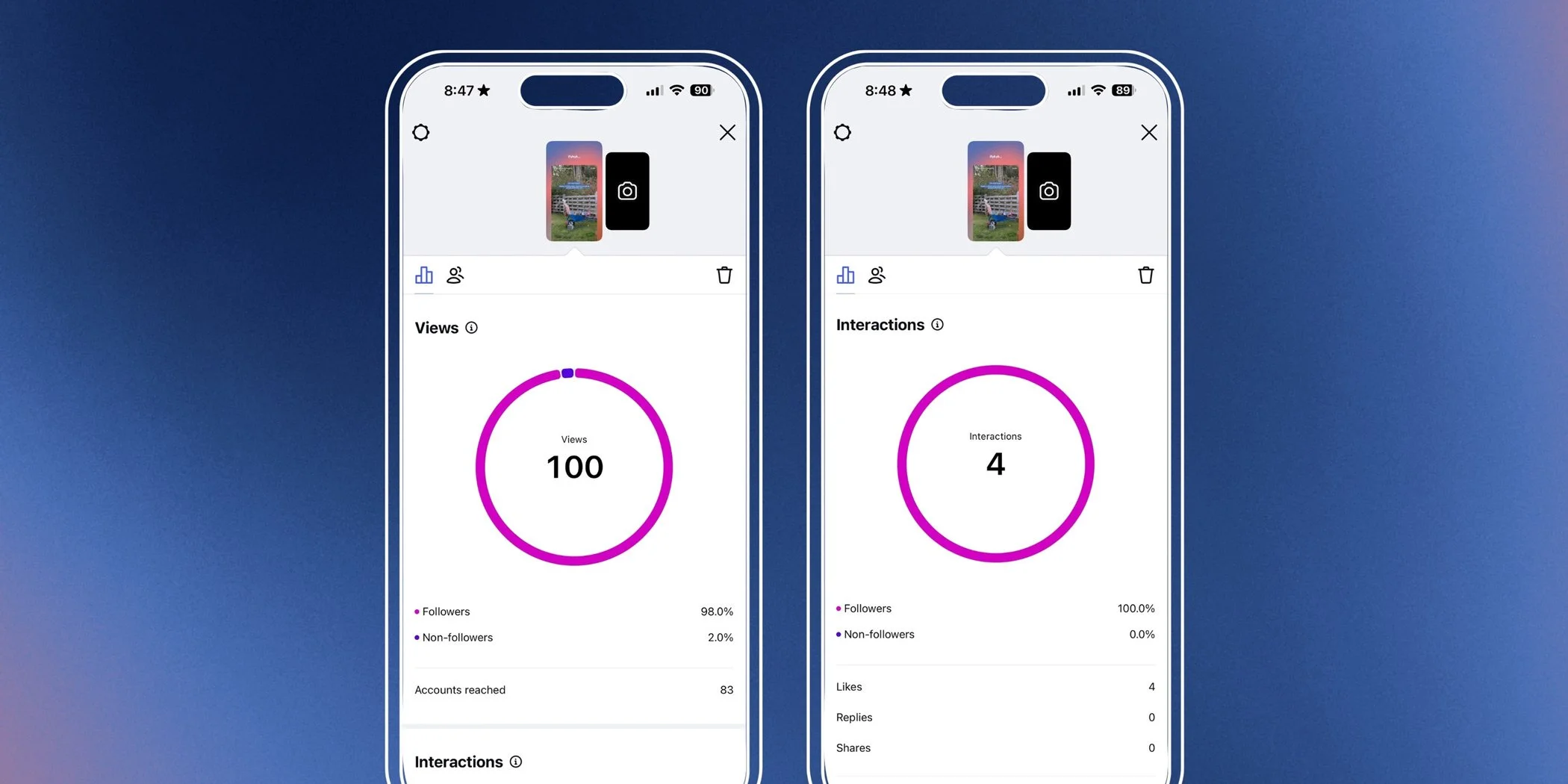
Not new people. Your people. The ones already following you, already a little bought in, already familiar with your brand.
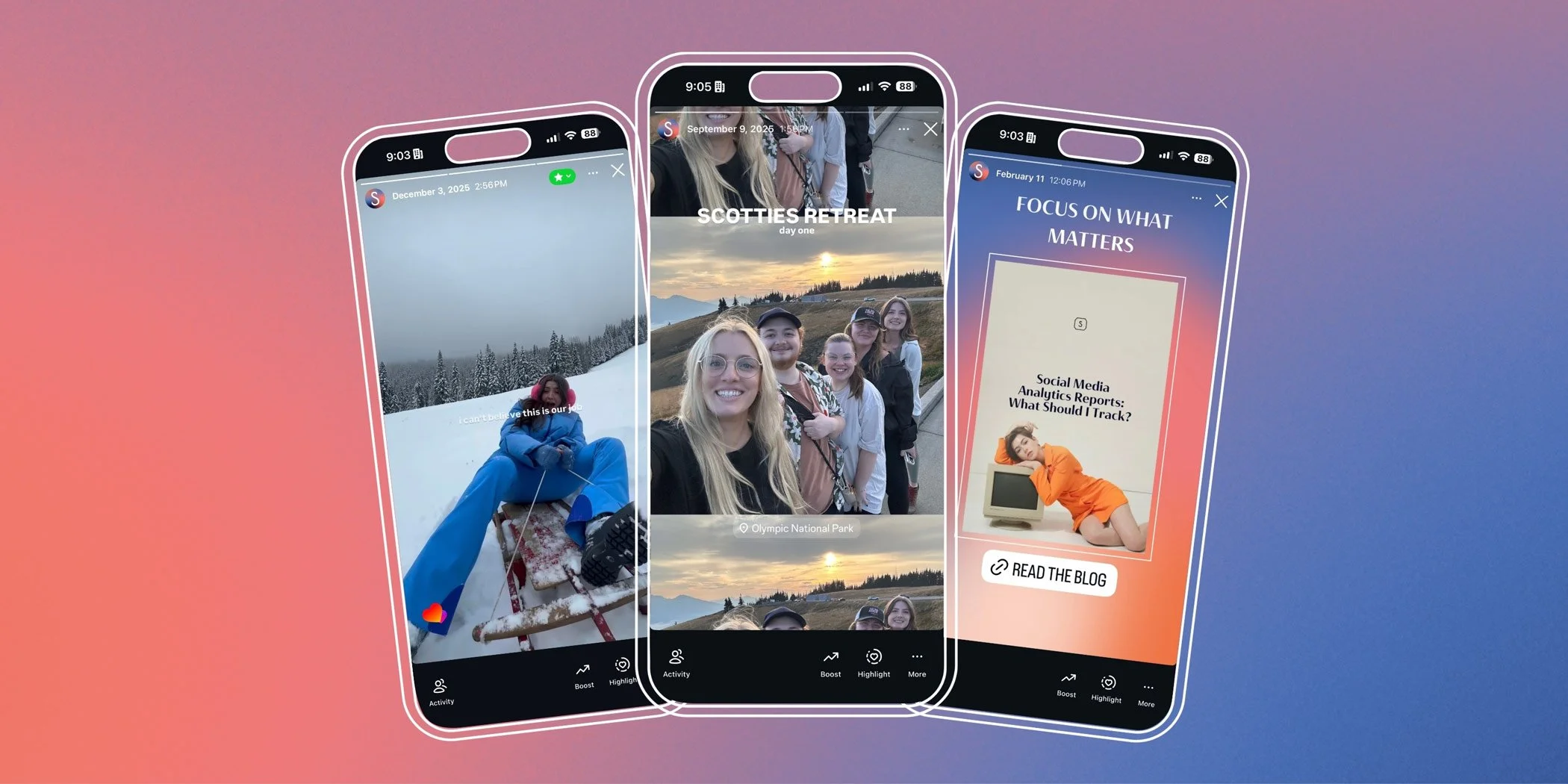
Stories show up in that bubble at the top of the feed and disappear after 24 hours. That's intentional. They were built for the moment—for content that doesn't need to live forever.
This is the place for a flash sale going live tonight. A behind-the-scenes clip from a shoot. A "Which one do you prefer?" poll. A link to the blog post you just published.
Think of Stories like your brand's group chat—casual, current,
and meant for the people who already have your number.
What they're not built for: reaching new audiences.
There's no public Explore feed for Stories. No algorithm pushing them out to strangers. If someone doesn't follow you, they're not seeing your Story—and that's not a flaw. It's by design.
According to Instagram's own data, 58% of people report becoming more interested in a brand after seeing it in Stories, and 50% visit a website to make a purchase they saw there.
Stories are a conversion tool. A community-builder. Treat them like one.
Reels Are for Strangers
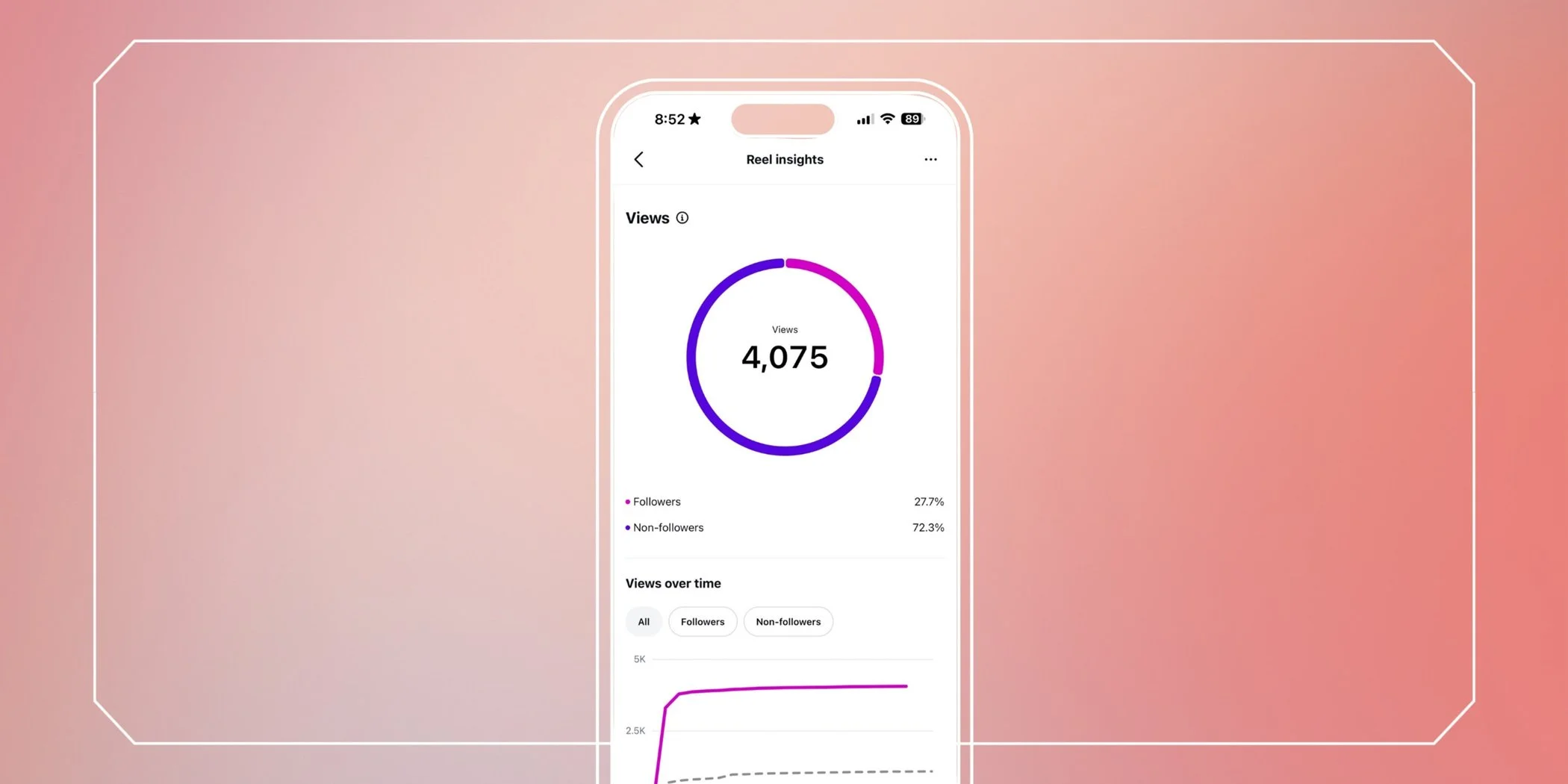
Instagram built Reels to compete with TikTok, and the algorithm behaves accordingly. Reels live in the Reels tab, on Explore, and in the main feed—served to non-followers based on interests, watch history, and engagement signals.
Meta has been very loud about this: Reels are the platform's primary discovery engine. A 2024 Buffer study found Reels deliver 2.25x more reach than single-image posts. That's not because Reels are inherently better content—it's because they're built for a completely different goal.
Reels are where you get found. Stories are where you keep people.
If your Reels aren't performing, the problem is almost never the quality of the video. It's usually a missing hook, the wrong audio choice, or no real strategy behind what you're creating in the first place.
When Should You Use Instagram Stories vs Reels?
"Use Reels for reach and Stories for engagement" is advice that sounds helpful and tells you almost nothing.
Let's get specific.
Post it as a Reel if…
Your content could stop a complete stranger mid-scroll.
If someone who's never heard of your brand could watch it and immediately understand who you are, what you do, and why they should care—it belongs in Reels.
Product demos. Transformation videos. A take that's a little spicy. Anything with a real hook.
Anything you want circulating past this week—because unlike Stories, Reels stick around and keep getting discovered long after you post them.
💡 Need ideas? Steel these eight easy Instagram Reels ideas for businesses.
Post it as a Story if…
It's time-sensitive, interactive, or genuinely meant for people who already know you.
Flash sales. Polls. Q&As. Behind-the-scenes moments that a stranger wouldn't have context for. Link drops. Announcements. Valuable tips.
If the content assumes your audience already knows and likes you—Story.
💡 Need ideas? Check out these fifteen Instagram Story ideas for businesses, proven to increase engagement.
Instagram Stories vs Reels: The Mistake We See Most
Brands going all in on Reels because they want growth—then wondering why their community feels cold. Or brands that post exclusively to Stories and can't figure out why their follower count hasn't moved in months.
Neither format alone is a strategy. Both, used with real intention, start to look like one.
And intention is the keyword here. Every post should earn its place—whether it's a Reel built to reach 10,000 new people or a Story designed to get 200 existing followers to click a link. The goal drives the format. Not the other way around.
Need Help With Your Instagram Strategy?
Consider this our link sticker.
If you've been staring at the "create" button, wondering what to post, when, and whether it's even working—that's where we come in.
At Scott Social, we handle every piece of your Instagram strategy through comprehensive social media management: Reels, Stories, captions, community management, analytics, and all of it. Our clients hand off the reins entirely and get back to running their business.
Sound like what you need? Drop a message in our inbox.
FAQs About Instagram Stories vs Reels
-
No. Reels and Stories serve different purposes. Reels help new audiences discover your content, while Stories help strengthen relationships with existing followers and drive engagement.
-
Most businesses should use both. Reels are ideal for increasing reach and attracting new followers, while Stories are effective for sharing updates, promoting offers, and building community.
-
Generally, yes. Reels are distributed to both followers and non-followers through Instagram's algorithm, while Stories are primarily shown to existing followers.

WRITTEN BY:
Halie Engler
Social Media Strategist